






In honor of Women’s History Month
Every year when Women’s History Month comes around, it’s not only a celebration of women in our history and society, it is an opportunity to learn and teach their stories that helped shape the world we’re living in.
While researching this piece, I realized that I knew so much less than I thought. Some of these women were already familiar names to me — artists, activists, musicians, people whose work I’d heard about growing up. But the deeper I went into the research, the more I started discovering other women whose stories were just as incredible and somehow never crossed my radar before.
I went to school in both Mexico and the United States, so you’d think somewhere between those two places I would have learned about more of them along the way. But that’s kind of the point of doing something like this. When you start digging into history, you realize there are entire stories that were always there — they just weren’t always told.
A perfect example for me is Frida Kahlo.
I’m a huge Frida fan. I became borderline obsessed with her in 9th grade — reading about her life, her art, the unapologetic authenticity and those eyes that are as if she is looking at your soul. But the funny part is that I actually discovered Frida here in the United States after moving from México in 2017. Back home, where I grew up, I had never heard of Frida Kahlo and neither did most of the people around me.
So in honor of Women’s History Month, I wanted to highlight a few Latina women whose influence shaped art, politics, music, and civil rights across generations.
Some of these names are global icons. Others you may be learning about for the first time.
Part of the “Latina & Indigenous Women Who Changed History” Series
This article is part of a short series highlighting Latina and Indigenous women from Latinoamerica whose stories shaped culture, activism, politics, and art across the Americas & the world.
Throughout the series we’ll explore women from different countries, movements, and generations — from artists and activists to revolutionaries and cultural icons.
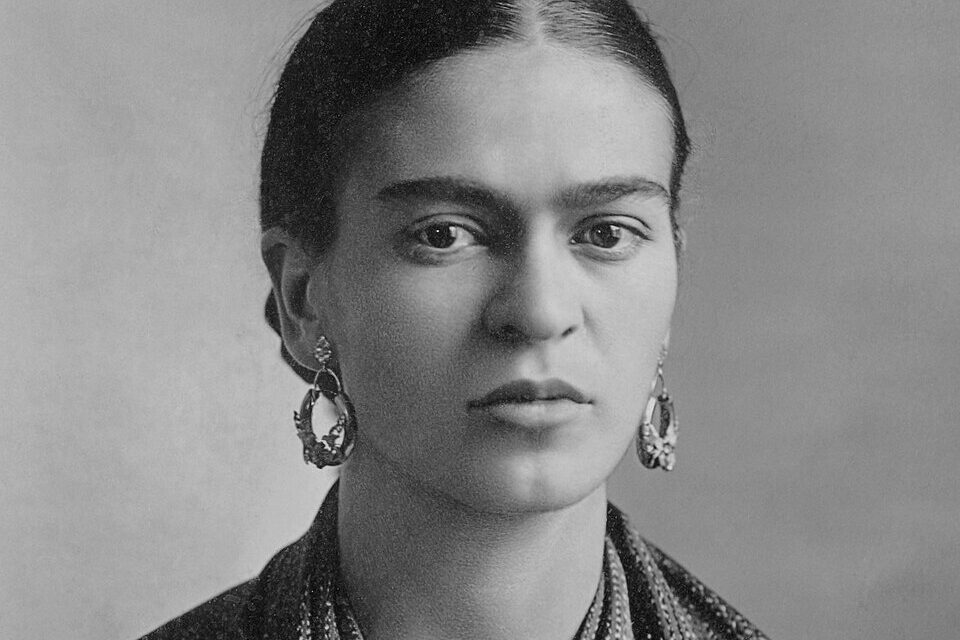
Frida Kahlo (1907–1954)
Frida Kahlo has become one of the most recognizable artists in the world. Her face appears on murals, museum walls, tote bags, and college art textbooks.
But what always pulled me toward Frida wasn’t the iconography– she was the icon she is today. It was that gaze in her paintings, her photographs, that daring look; forcing you to pay attention, to see her.
She was born in Mexico City in 1907 and originally planned to study medicine. That path changed dramatically after she survived a horrific bus accident at eighteen. The injuries left her dealing with chronic pain for the rest of her life.
During her recovery she began painting.
Many of her earliest works were self-portraits, partly because she spent so much time alone while healing. But those portraits quickly evolved into something deeper. Through her paintings, Kahlo explored identity, disability, politics, gender, and Indigenous heritage in ways that were incredibly bold for her time.
“I paint myself because I am so often alone and because I am the subject I know best.” – Frida Kahlo
When I first learned about her in school, it felt like discovering someone who refused to be anyone but herself. Everything lived together in her work — the pain, the politics, the beauty, the contradictions.
And somehow that raw honesty turned her into one of the most influential artists of the twentieth century.
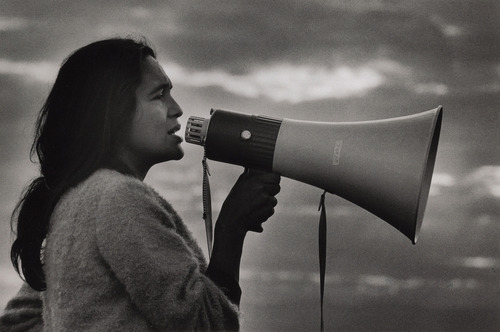
Dolores Huerta (1930–Present)
Dolores Huerta is one of the most important labor organizers in American history.
In the 1960s she helped co-found the United Farm Workers union alongside César Chávez, organizing agricultural workers across California and the United States. These were workers harvesting the food that fed the country while often working in extremely harsh conditions.
Huerta was not just marching in protests. She was negotiating contracts, organizing strikes, and building the strategy behind a national labor movement that demanded dignity and rights for farmworkers.
Her organizing helped bring attention to workers who had long been invisible in the national political conversation.
She’s also the person who gave the world the phrase:
“Sí se puede.” – Dolores Huerta
It started as a message to farmworkers who were exhausted and unsure if the fight for better conditions was worth continuing. Huerta’s answer was simple, “yes, it’s possible.”
Decades later that phrase still echoes through movements for social justice across the world.
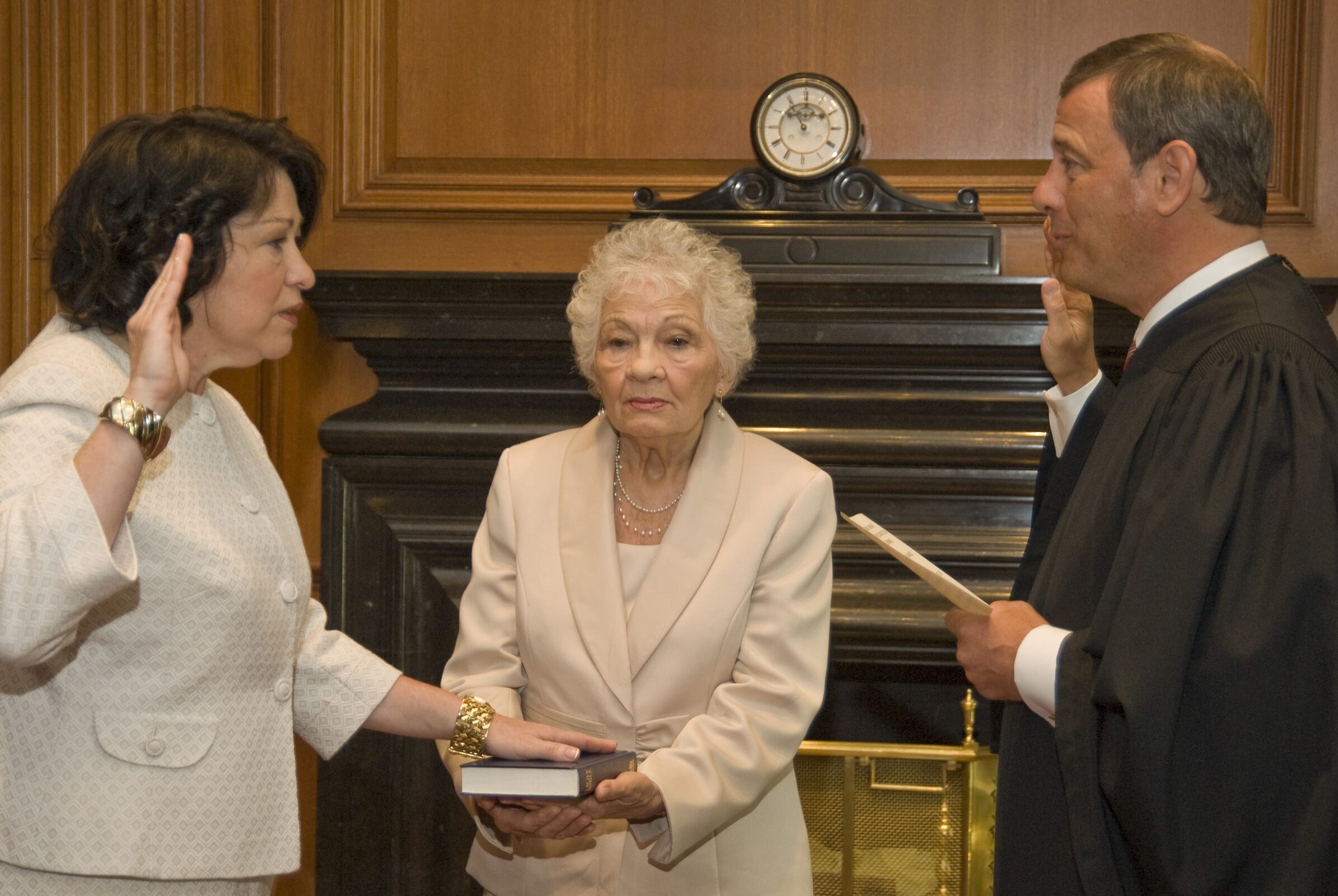
Sonia Sotomayor (1954–Present)
Sonia Sotomayor’s story begins in the Bronx, in a working-class Puerto Rican family that believed education could open doors even when the odds felt stacked against them.
After her father passed away when she was still young, her mother worked long hours as a nurse to support the family and keep her children focused on school. That determination shaped much of Sotomayor’s outlook.
She eventually graduated from Princeton University and later Yale Law School before building a career as a prosecutor and federal judge.
In 2009 she was nominated to the United States Supreme Court.
When she took her seat, she became the first Latina justice in the history of the court.
For many Latino families across the country, that moment carried a symbolic weight that’s hard to describe. It wasn’t just about one person reaching the highest court in the nation. It expanded the idea of who belongs in the rooms where major decisions are made.
Sotomayor has often spoken about the role of lived experience in shaping how people understand justice.
“Until we get equality in education, we won’t have an equal society.” – Sonia Sotomayor
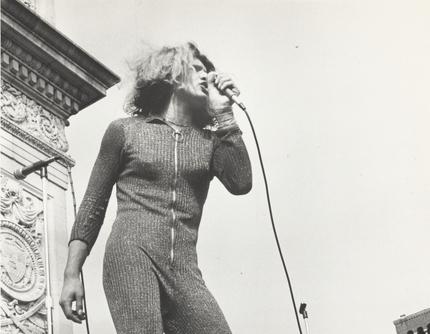
The New York Public Library, Astor, Lenox, and Tilden Foundations
Sylvia Rivera (1951–2002)
Sylvia Rivera was one of the fiercest voices in the early LGBTQ liberation movement.
A Latina transgender activist of Puerto Rican and Venezuelan descent, Rivera experienced homelessness as a teenager in New York City. Life on the margins shaped her understanding of what survival looked like for queer and trans people who lacked family support and resources.
Rivera was involved in the Stonewall uprising in 1969, one of the defining moments that helped ignite the modern LGBTQ rights movement.
But her activism didn’t stop there.
Rivera spent years calling out the ways transgender people, queer youth living on the streets, and people of color were often pushed to the margins of the very movement that claimed to represent them.
Together with Marsha P. Johnson, she co-founded STAR (Street Transvestite Action Revolutionaries), an organization that provided shelter and support for homeless transgender youth.
As a gay man myself, reading about Sylvia Rivera’s story always hits differently. People like her — and so many other queer women and trans women who fought before us — created space for the rest of us to live more openly today, and to be completely honest, it was not long ago I truly learned who she was, and the impact she had in my own community.
The fact that I can be out and proud is because of the courage of people like Sylvia Rivera.
One of her most famous moments came when she addressed a crowd frustrated with the gay movement’s exclusion of trans voices.
“I have been beaten. I have had my nose broken. I have been thrown in jail… for gay liberation.” – Sylvia Rivera
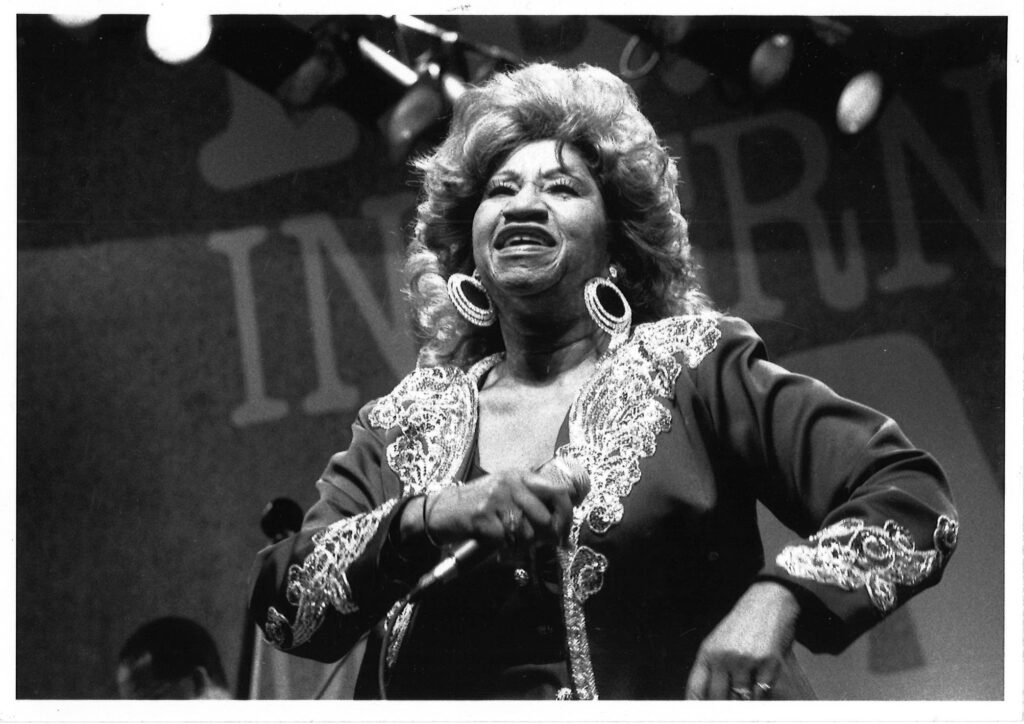
Lee Mergner Jazz Photography Collection, Music Division via Library of Congress
Celia Cruz (1925–2003)
Celia Cruz is one of those voices that somehow feels bigger than music.
Born in Havana, Cuba, she began singing at a young age and eventually became one of the most influential performers in Latin music. Her career took off in the 1950s when she joined the legendary orchestra La Sonora Matancera.
After leaving Cuba following the revolution, Cruz built an international career that helped bring Afro-Cuban rhythms and salsa to audiences around the world.
Her voice was powerful, joyful, and unmistakable.
But what people remember most about Celia isn’t just the music. It’s the energy she brought to every stage.
Watching her perform felt like watching someone completely alive in the moment.
And of course there was the phrase that became part of her legacy:
“¡Azúcar!” – Celia Cruz
If you grew up in a Latino household, chances are Celia Cruz’s voice showed up somewhere — a family party, a radio station, or your tía blasting salsa while cleaning the house on a Saturday morning.
These five women changed history in completely different ways — through art, organizing, law, activism, and music.
For me, learning about them has been a reminder that history is always bigger, their stories are more than just their accomplishments, they are women whose courage, resilience and cultura shaped them to be the icons they are today.
I grew up with a sister, and now I have two nieces growing up in a very different world. Knowing these names matters. Talking about them matters. Because I want women like my nieces to know who fought, created, organized, and reshaped history, it shows them how powerful they truly are.
This article is part of a short series highlighting Latina and Indigenous women whose stories shaped culture, politics, activism, and art across the Americas. Some of these women come from Latin America, others from Latino communities in the United States, but all of them left a lasting mark on history in their own way.
This article was researched and written by Salvador Flores-Trimble, founder of Playalarga. Artificial intelligence tools were used to assist with grammar editing and research organization, while the editorial voice, analysis, and storytelling remain the author’s own.
RELATED POSTS
Women of Long Beach
Woman Owned Business: Leticia Maldonado