


In 1914, Long Beach hired two actors to entrap gay men, printed their names in the newspaper, and drove one of them to his death. Then the city kept running the same stings for over a hundred years, until one man took them to court and won. Twice.
We have to know our history. Not the cleaned up version, not the version that fits on a plaque, the real one. We have to honor the men who lived it, say their names out loud, and be proud of the ones who fought back when fighting back could cost them everything. And we have to keep asking who gets held accountable when a city does this to its own people, because that question never actually went away. Who gets a say in our pride celebrations, and should the city be one of them? I do not think you can answer any of that honestly until you know what happened on our streets.
In the summer of 1914, Long Beach had a new mayor, Louis Napoleon Whealton, three months in office, already facing a recall, already suspending his own police chief over the blind pigs and gambling everybody knew about down at the Pike. The town was dry, churchy, and proud of it. And the newest researched history of what happened next, Gerrie Schipske’s book The Long Beach Gay Trials, says the motive wasn’t only morals: Whealton had raided the city treasury, and the fine scheme that followed was built to put the money back. Hold onto that, because it explains everything about how ugly this got.
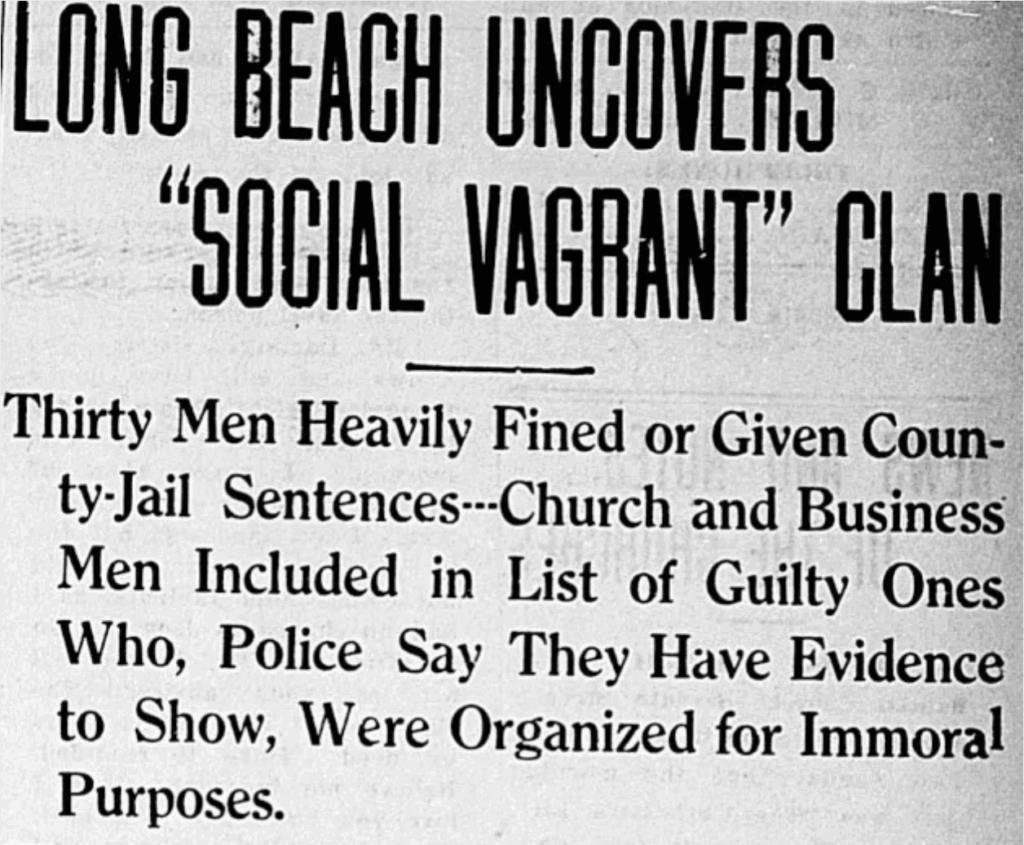
The scheme itself wasn’t even invented here. Two actors, W.H. Warren and B.C. Brown, had pitched an entrapment act to the LAPD first, and Los Angeles turned them down. Long Beach hired them in August 1914 as, and this is the real job title, “purity raid specialists.” No law enforcement training. Just two actors, made special deputies, paid $10 a head. At the trial that eventually exposed them, Brown testified the money was $10 for every confession they could pull out of a man. Confessions were the product. Entrapment wasn’t a side effect, it was the business model.
They worked the parks, the bathhouses, and a brand new public restroom the city had built, a comfort station, where, according to Faderman and Timmons in Gay L.A., decoys got men to expose themselves through the partitions and marked their bodies with an indelible pencil so the police could identify them later. They worked private homes too. One of them, Brown, rented a back cottage from a local florist named Herbert Lowe, and while Lowe was in Brown’s bedroom, in what he thought was a private moment, other officers watched through a window and a peephole in the ceiling.
By the end of September, 31 men had been rounded up, accused of belonging to two private clubs, the 606 and the 96, where police claimed men cross-dressed and held orgies. Most of them paid fines between $100 and $500 to make it go away, and the men who couldn’t pay did 180 days in jail. The fines weren’t incidental, they financed the sting itself, and the city collected more than $5,000 from the November arrests alone. And then, on November 14, 1914, the Los Angeles Times printed the names and professions of the accused for the whole region to read.

One of those men was John A. Lamb. Pharmacist, banker, vestry member at St. Luke’s Episcopal, a man who lived with his sister and had built a respectable life. Lamb had already paid a $500 fine immediately, hoping that would buy him silence. It didn’t. The morning his name ran in the paper he went out to Point Fermin and drank potassium cyanide, and when they found him he had a copy of the Times article with him. He left a note to his sister saying he was the victim of a situation and he could not endure this publicity. The city got so scared other men would follow him that it temporarily restricted the sale of poison in Long Beach. And a week later, after Lamb was already dead, Police Judge J.J. Hart was still publicly defending the decision to print the names.

Herbert Lowe fought. He’s the one who took it to a jury. His lawyer, Roland Swaffield, called Warren and Brown stool pigeons and told the jury their hands dripped with the blood of John Lamb, and on December 12, 1914, that jury acquitted Lowe in thirty minutes. Thirty minutes. Twelve regular people in 1914 took one look at this operation and threw it out.

And still, the law got worse because of Long Beach. In 1915, the year after the raids, California made oral sex a felony under Penal Code 288a, and the City of Los Angeles’ own official LGBTQ historic context statement says that law was enacted as a direct result of the arrest of 31 men in Long Beach in 1914. That is our city’s contribution to state law. Even the newspapers knew the shaming had blood on it: a rival publisher, Edwin Earl, called the Times‘ name-printing “homicidal journalism,” sued them for libel over the feud that followed, and won $25,000, upheld by the California Supreme Court. In 1914, people already knew. Nobody with power in Long Beach has said it, then or since.
Because here is the part people really don’t believe when I tell them: it did not end in 1914. Long Beach police kept running restroom decoy stings against gay men for a hundred years. In 1984, seventy years after the raids, Rob Kramme, the president of the Lambda Democratic Club, tried to get the vice squad’s practices changed and got nowhere. The club was keeping its own records of police harassment of gay men, because nobody official was going to. In the 1990s, attorney Stephanie Loftin was defending men caught in the stings, and the pattern she found was always the same: no witness except the cop himself, and most of the men so scared and ashamed that they pled down to disturbing the peace and paid close to a thousand dollars to make it go away. She started a support group for the victims at The Center, and even that got infiltrated by undercover officers spying on the men who showed up for help. Read that sentence again. And between 2012 and 2014 alone, the decoys took more than two dozen men into custody. The stings ran in my lifetime. They ran in the lifetime of everybody reading this.
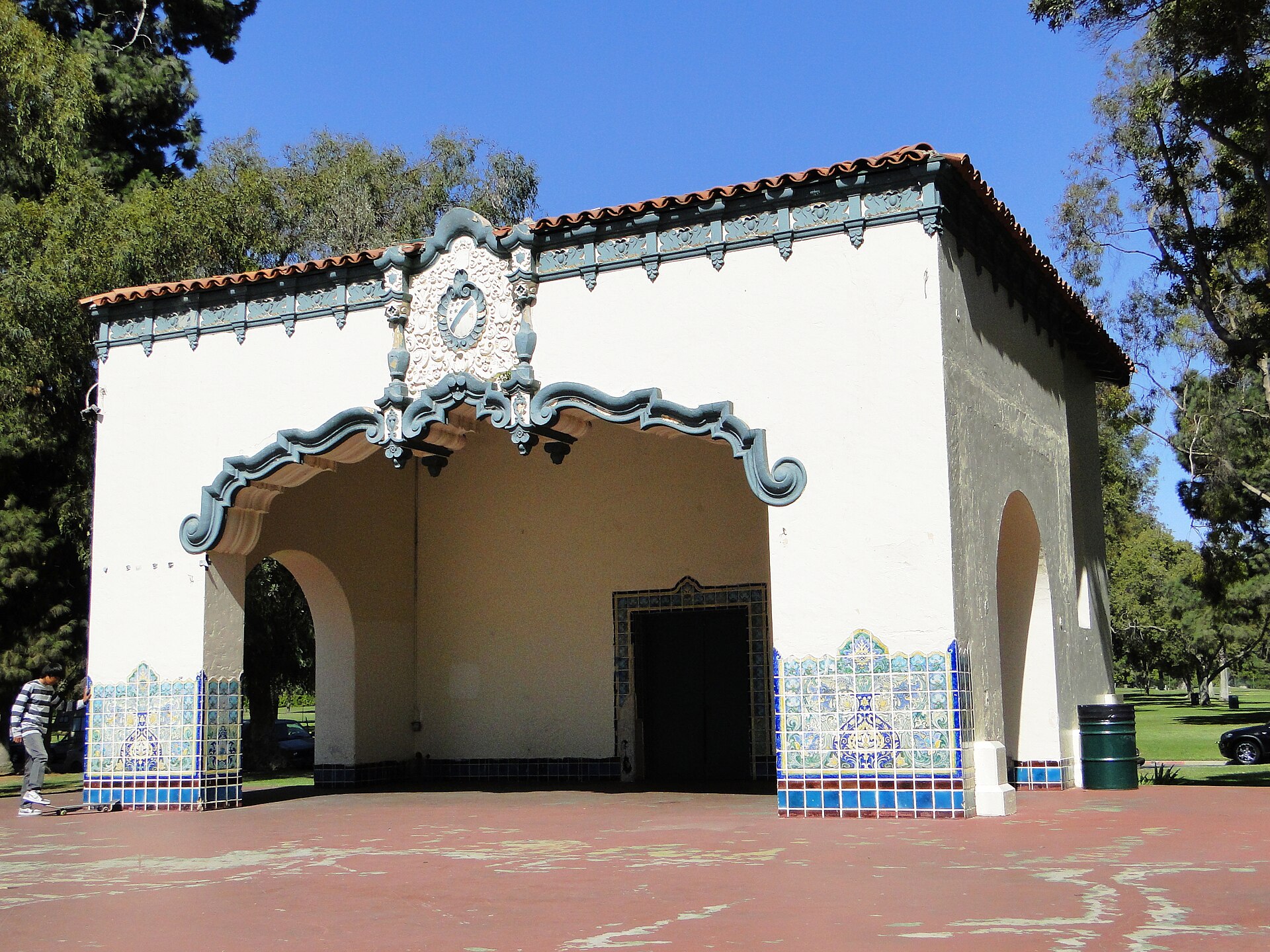
They ran until October 15, 2014, when an undercover decoy, Detective Raymond Arcala, arrested a man named Rory Moroney in a Recreation Park restroom. Moroney was charged with lewd conduct and indecent exposure, the kind of conviction that can put a man on the sex offender registry for life, and he fought, the way Lowe fought, exactly a century later. On April 29, 2016, Judge Halim Dhanidina dismissed his case and wrote what no Long Beach official ever had: that the department had demonstrated its intent to discriminate, that Moroney would not have been prosecuted except for this invidious discrimination, that the decoys’ tactics actually caused the crimes to occur, and that the stings violated the Equal Protection Clause of the California and U.S. Constitutions. The city chose not to appeal. The department quietly changed its procedures in 2017. Lawyers and advocates in this city had spent more than fifty years trying to get one of these cases thrown out, and they kept getting blocked before they could even see the police department’s own records. Dhanidina was the first judge to let them look.
And then Moroney did the thing almost nobody had ever done to this city over a hundred years of these arrests. He sued. Federal court, the City of Long Beach, the police chief, the officers, all of them named. And in June 2019, the city settled with him. He won. A hundred years after Warren and Brown got paid $10 a confession to manufacture criminals out of men in bathrooms, one of the men in the bathroom made the city pay instead.
The apology still has not come. Moroney has said it plainly himself, writing in Q Voice News ten years after his arrest: “neither I nor anyone in the LGBTQ+ community received any apology from the police department, the city, or the city prosecutor.” He closed that piece with a question: “How long will we have to wait for the authentic apology?” That is where it stands. The case is closed, the settlement is paid, and his question is still open.
I keep my store open on Broadway and I throw these parties, the picnics and the gatherings and Be Proud!, because I believe The Gayborbhood is where our people get to belong out loud. John Lamb died believing he had no way to live in this city as himself. Herbert Lowe bet his whole life that a jury would see the truth, and they did, in thirty minutes. Rory Moroney bet his that a judge would, and then he made the city settle for what it did. That history means alot to me, and it should be common knowledge on the street where it happened. It is not ancient. It ended in a courtroom, in our lifetime, because one man refused to just pay the fine and disappear. Say their names. Then go dance like you mean it, because that is what all of this was for.
Sources
- Homestead Museum, “The Long Beach Purity Raids of 1914 and Remembering LGBTQ+ History” (2019)
- Gerrie Schipske, The Long Beach Gay Trials: A History of Injustice (History Press, 2025), and Larry Reynolds’ review, “Cops in the Comfort Station,” The Gay & Lesbian Review
- Los Angeles Times Documents, “The Long Beach ‘social vagrant’ investigations, 1914” and “Long Beach banker suicide undercover gay sting“
- Lillian Faderman and Stuart Timmons, Gay L.A. (on the comfort station decoys and the indelible pencil)
- SurveyLA, LGBT Historic Context Statement, City of Los Angeles (2014), on Penal Code 288a (1915) as a direct result of the 31 Long Beach arrests
- Metropolitan News-Enterprise, “Reminiscing” series (2008), on the Nov. 14, 1914 Times article and Earl v. Times-Mirror Co.
- Los Angeles Times, “The handsome undercover cop smiles. Is he entrapping gay men or cleaning up a park?” (May 27, 2016), on the decoy stings and the Moroney ruling
- Q Voice News: “Long Beach police’s dark history of discriminating against gay men” (2020); “Long Beach police discriminate against gay men, judge says” (Apr. 29, 2017); “Long Beach Police sued by gay man arrested in decoy sting operation” (2017, updated: out-of-court settlement June 2019); “Halim Dhanidina talks historic Long Beach lewd conduct case ruling” (2022, on the fifty years of failed challenges and the August 2017 procedure change); Rory Moroney, “Long Beach police falsely arrested me 10 years ago, where is apology?” (Dec. 30, 2024)
- Forth (Long Beach), “To Support the Queer Community, Garcia Must Get out of Bed with the Police” (Lucas, 2020), on Loftin’s cases, the plea pattern, and the infiltrated support group
- Historical Society of Long Beach, Represented at Last: LGBTQ+ History (on Stephanie Loftin and the infiltrated support group, and Rob Kramme’s 1984 attempt to change vice policing practices)