




For more than a century, Long Beach’s LGBTQ+ community has been building something along Broadway.
Long before rainbow crosswalks, Pride celebrations, and official cultural district designations, LGBTQ+ residents were carving out spaces for themselves in a world that often treated them as outsiders. The history of the Broadway corridor is not simply a story of nightlife and celebration. It is also a story of resilience, survival, activism, and community.
In 1914, Long Beach police raided two gathering places frequented by gay men. Newspapers published details about those arrested, exposing individuals to public humiliation, discrimination, and social isolation. One of the men arrested, Jonathan Lamb, later died by suicide.
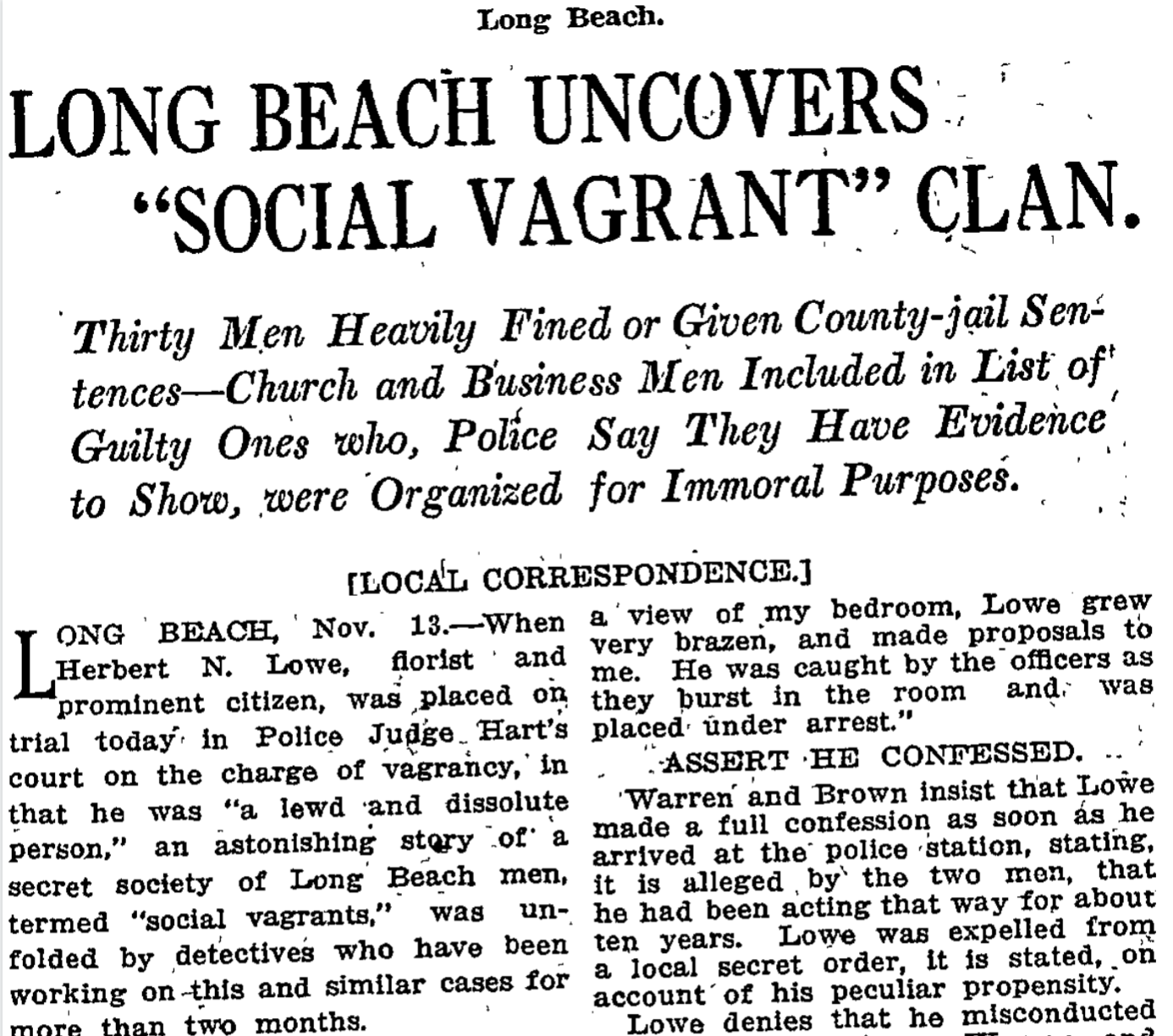
Throughout much of the twentieth century, LGBTQ+ residents faced police harassment, discrimination, public shaming, and entrapment. Being identified as gay could cost someone a job, housing, family relationships, or social standing. Yet despite those challenges, community members continued creating spaces where they could gather openly and safely.
Broadway gradually became one of those spaces.
Bars, restaurants, churches, advocacy organizations, social clubs, and LGBTQ+-owned businesses transformed the corridor into one of Southern California’s most significant queer neighborhoods. By the 1980s, the Los Angeles Times referred to the area as a “Gay Mecca,” recognizing the concentration of LGBTQ+-owned businesses and residents that had made the neighborhood a destination throughout the region. We locals call it, The Gayborhood.
Long before the City of Long Beach began discussing cultural districts, the community had already created one. That history is what ultimately led the Long Beach City Council to begin exploring an official LGBTQ+ Cultural District in 2022. The goal was not to create a new community, but to formally recognize one that had existed for generations.
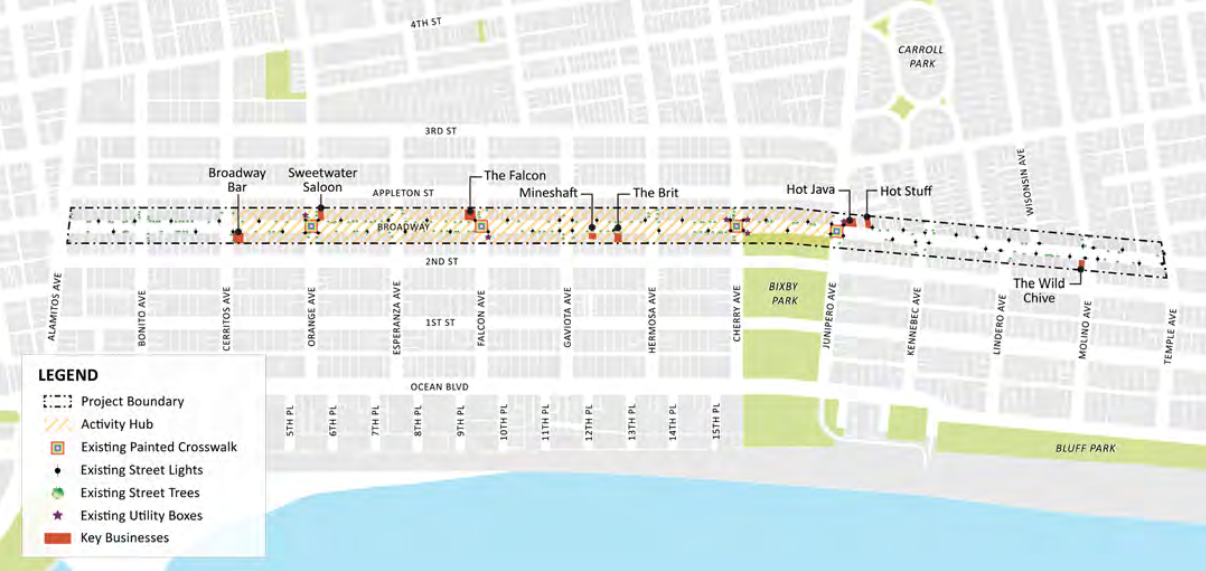
After nearly two years of community engagement, surveys, workshops, stakeholder meetings, and public outreach, the City adopted the LGBTQ+ Cultural District Strategic Improvement Plan in May 2024. The district stretches approximately 1.4 miles along Broadway from Alamitos Avenue to Temple Avenue, encompassing many of Long Beach’s historic LGBTQ+ businesses, gathering spaces, and community institutions. Source:
According to the City, the district is intended to preserve LGBTQ+ history, support local businesses, improve public spaces, strengthen neighborhood identity, and celebrate the corridor’s role in Long Beach’s cultural landscape.
One of the most encouraging aspects of the process is that many of the recommendations came directly from residents.
More than 1,000 community members participated through surveys, public meetings, workshops, and stakeholder discussions. Community members consistently requested more public art, historical interpretation, decorative lighting, murals, trees, educational installations, and visual markers celebrating LGBTQ+ history and culture. The result is a vision that attempts to honor both the history and future of the neighborhood.
But it is also important to understand exactly what has been approved—and what has not. One of the biggest things to note is that $8.8 million worth of improvements have not been funded or secured.
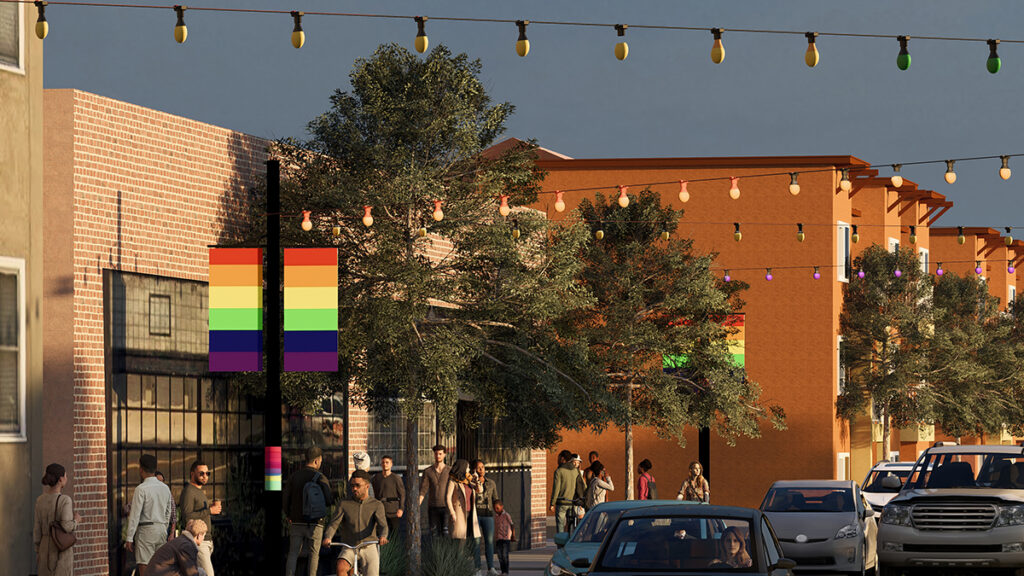
Other proposed improvements include street trees, tree uplighting, murals, string lighting, decorative crosswalks, façade lighting, historical plaques, educational installations, banners, and public art.
According to the Strategic Improvement Plan, approximately $2.5 million in Measure A funding was identified through the broader Elevate ’28 Infrastructure Investment Program as a potential funding source for district improvements.
The City did not create a new $2.5 million fund exclusively for LGBTQ+ Cultural District projects. Rather, it identified existing Measure A dollars from Elevate ’28 that could be used toward implementation. Elevate ’28 is a citywide infrastructure investment program that funds parks, mobility improvements, neighborhood infrastructure, cultural projects, public facilities, and other community investments throughout Long Beach.
The Strategic Improvement Plan was intentionally organized into phases.
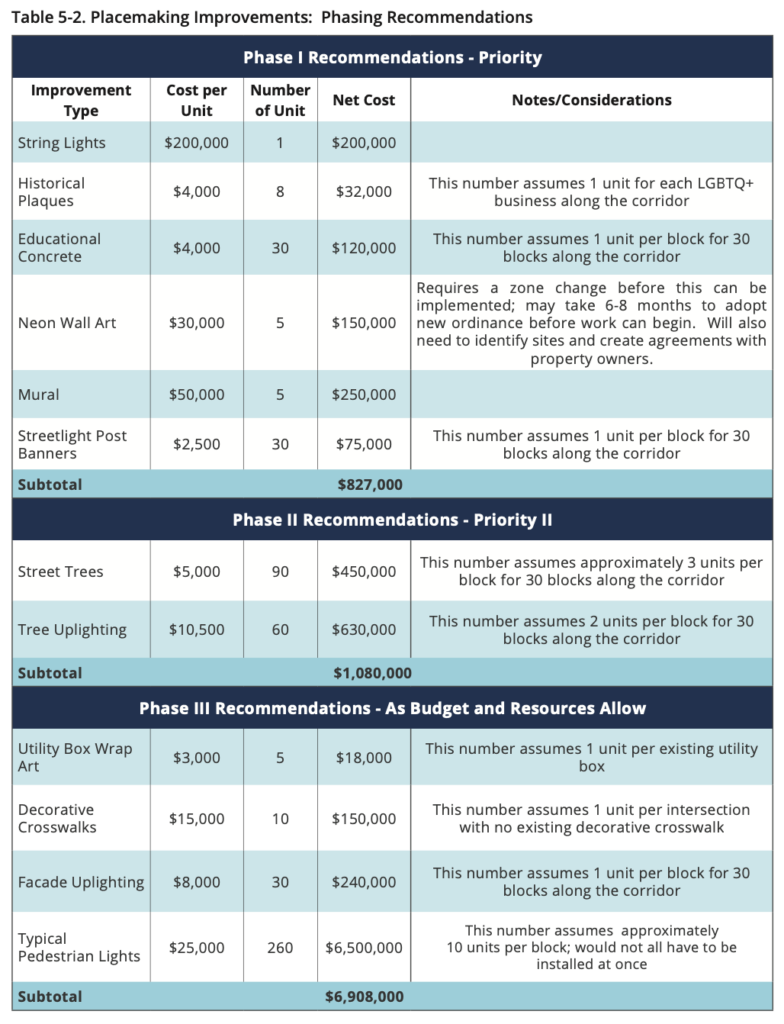
- Phase I is estimated at approximately $827,000 and includes murals, string lights, historical plaques, educational installations, neon wall art, and banners.
- Phase II is estimated at approximately $1.08 million and focuses largely on street trees and tree uplighting.
- Phase III includes larger infrastructure projects such as decorative crosswalks, façade lighting, and pedestrian-scale lighting, bringing the total vision to approximately $8.815 million.
Recent reporting by the Long Beach Post indicates that the City has assembled approximately $3.3 million through a combination of Measure A funds and federal earmarks for the initial implementation area between Hermosa Avenue and Junipero Avenue.
That funding does not cover the entire district.
What it does provide is a path forward for the first phase of implementation.
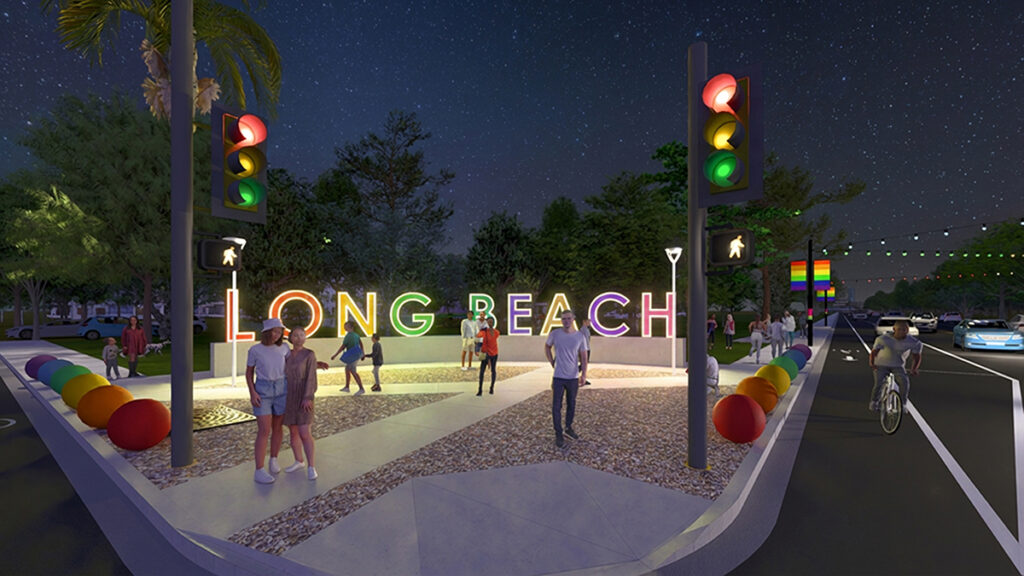
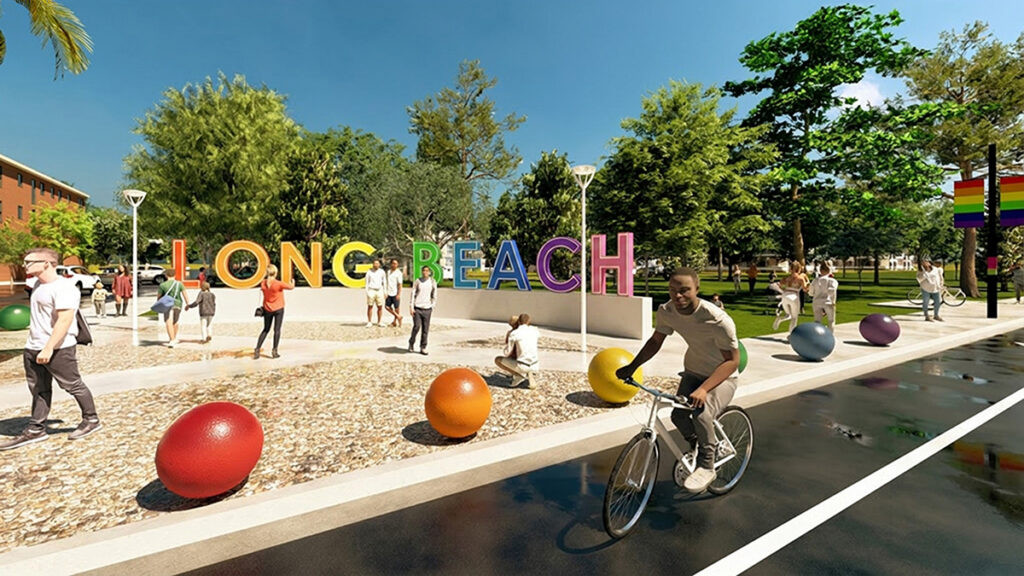
According to Long Beach Public Works, current concepts include a Pride Plaza, murals, public art, historical interpretation, string lighting, streetscape improvements, and new trees. Source:
In other words, some parts of the plan are moving from concept to reality.
Others will require future grants, state funding, federal funding, and future City Council appropriations before they can move forward. That distinction matters because a Strategic Improvement Plan is not a construction contract. It is a roadmap.
The LGBTQ+ Cultural District is real. The plan has been adopted. Funding has been identified for the initial implementation area. Design work is underway. But the full $8.8 million vision remains just that—a vision.
The Gayborhood was built by generations of LGBTQ+ residents, business owners, artists, activists, organizers, and everyday community members who created spaces for one another when few others would. They built businesses. They built community organizations. They fought discrimination. They cared for one another during the AIDS crisis. They created places where people could belong.
The City is not creating Long Beach’s LGBTQ+ Cultural District. The community already did that. What the City is doing now is formally recognizing it.
Whether the district ultimately thrives will depend on more than public investment. It will depend on all of us continuing to support LGBTQ+-owned businesses, preserve our history, welcome new generations into the community, and take care of the Gayborhood that generations before us built from the ground up.
Written and researched by Salvador Flores. Enhanced with AI for grammar, organization, and editorial support.
Related Articles: