






I didn’t learn this history in school.
And chances are, neither did you.
This article was inspired by a short Instagram video by @ashleytheebarroness that woke up something in me personally and it named a truth plainly. In the early 20th century, Mexican and Mexican American children were routinely treated as intellectually inferior in U.S. public schools—not because they couldn’t learn, but because they spoke Spanish. That video didn’t just spark curiosity. It unlocked something deeper. A recognition that what many of us experienced as children wasn’t individual failure or bad luck—it was systemic.
For decades, Spanish was treated not as a language, but as a liability. And for many Mexican children, it was treated as proof of intellectual deficiency.
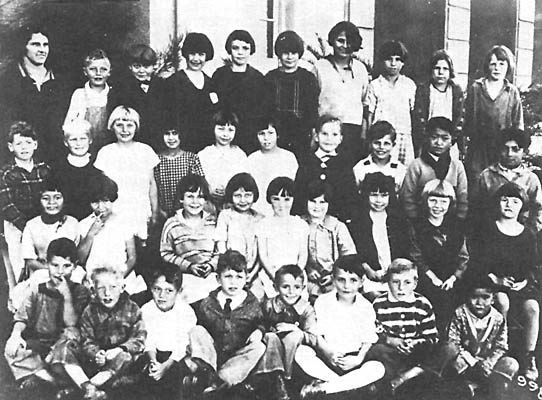
When Language Became a Measure of Intelligence
In the 1920s and 1930s, Mexican children across California and the Southwest were commonly segregated in public schools. Sometimes this took the form of entire “Mexican schools.” Other times it was subtler: separate classrooms, “opportunity rooms,” or special tracks justified by claims of language deficiency or “Americanization.” The language sounded neutral. The consequences were not.
These schools were often underfunded, overcrowded, and designed with one assumption in mind—that Mexican children were destined for labor, not leadership. English fluency was framed as the gatekeeper to intelligence itself. If you didn’t speak English, you weren’t seen as learning differently. You were seen as learning less.
This belief was reinforced by the pseudo-science of the era. Intelligence testing exploded in popularity, deeply influenced by eugenics and racial hierarchy. IQ tests—administered only in English, stripped of cultural context—became tools for sorting children early and permanently. Mexican children predictably scored lower, and instead of questioning the tests, schools questioned the children.
That’s where the most disturbing part of this history lives. Mexican children were frequently described in official educational and psychological research using the era’s clinical language for intellectual disability. Labels that today are widely understood as slurs were once considered legitimate classifications. These labels justified removing Mexican children from academic pathways and placing them into programs that limited their futures before they had a chance to begin.
Not because they couldn’t learn.
But because the system refused to meet them where they were.
This wasn’t an abstract policy. It played out in real communities.
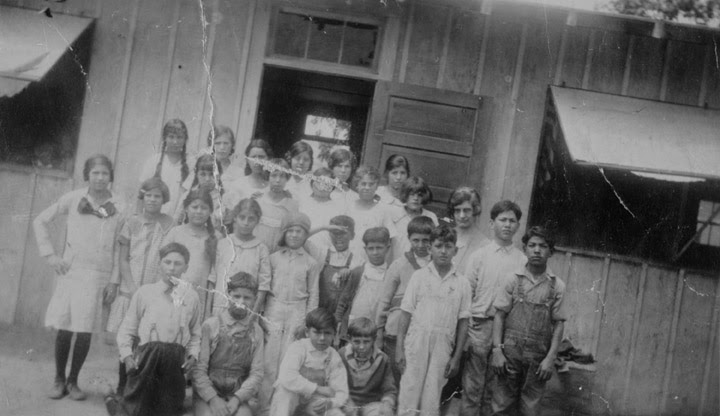
Segregation by Another Name
In 1931, in Lemon Grove, California, Mexican children were barred from their local public school and redirected to a separate building—a converted barn. School officials claimed the separation was about language and hygiene. Parents recognized it for what it was: segregation. They organized, boycotted, and sued. They won.
The Lemon Grove case became the first successful school desegregation case in U.S. history, more than a decade before Brown v. Board of Education. It proved that Mexican families were not passive victims of discrimination—they were active resistors. But while the ruling mattered, it didn’t end the practice.
Segregation continued, often defended by a legal loophole: Mexican Americans were frequently classified as “white,” allowing districts to argue that separating them wasn’t racial discrimination. Language became the excuse that kept segregation alive.
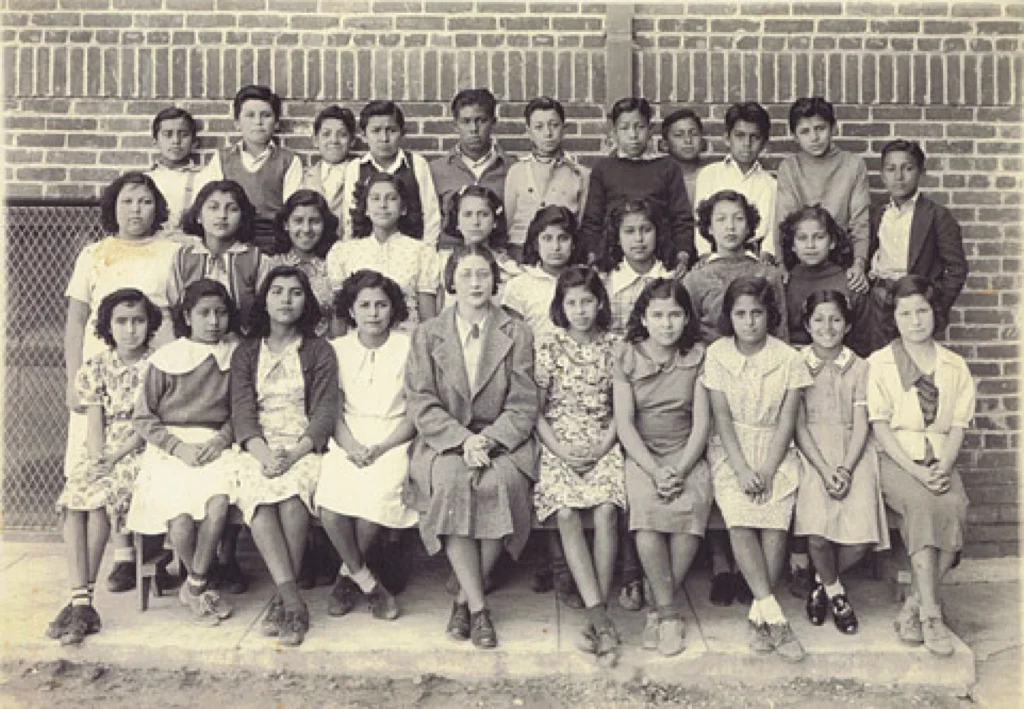
That logic finally cracked in the 1940s with Mendez v. Westminster. In Orange County, the Mendez family and four other Mexican American families challenged school districts that forced their children into separate “Mexican schools.” The court ruled that segregation based on language and ethnicity violated the Constitution’s guarantee of equal protection.
The decision mattered far beyond California. It helped shape the legal arguments later used in Brown v. Board of Education. And yet, like Lemon Grove, it remains largely absent from the history many of us were taught.
Even after segregation officially ended, the ideology behind it did not disappear. It evolved.
By the 1960s and 1970s, Mexican American children were still being disproportionately placed into classes for students labeled “mentally retarded,” now through standardized testing rather than segregated buildings. English-only IQ tests continued to conflate language difference with intellectual disability until families once again had to fight back through the courts.
The labels changed.
The damage didn’t.
Held Back for Not Speaking English
That realization lands heavy decades later.
My childhood wasn’t defined by tragedy in the way people expect trauma to look. But the damage was real. Being held back because of language teaches you to question your worth. It plants insecurity. It tells you, quietly but persistently, that your voice is a problem, that you are not capable, that you don’t belong.
Like many immigrant kids, my siblings and I became translators early. We translated bills, medical visits, legal documents, late payments—things children shouldn’t have to carry. We learned adult responsibilities because language became our responsibility, not society’s.
And the racism was constant. Accents mocked. The endless “where are you from?” People asking me to repeat words so they could laugh or “correct” me. Even authority figures participated. My own white English Honors teacher once offered to help me “get rid of my accent” so people would take me more seriously.
That wasn’t support.
That was supremacy dressed up as concern.
For years, it made me shrink my Spanish. It created shame around my culture. It pushed distance between me and my people—not because I rejected who I was, but because I was trying to survive.
Only until just a few years ago I began to understand: survival is not shame.
Today, I’m proud of my accent. I’m proud I speak two languages; something most people in America don’t. That is not a weakness—it is power.
History matters.
Featured Photo: Mrs. Buyers taught third through sixth grade at the segregated Bryn Mawr from 1933-1939. These Mexican-American students were prohibited from attending Mission School which had more teachers and better facilities.
Source: Loma Linda Area Parks and Historical Society Digital Archive
SOURCES:
- Instagram Reel (inspiration) by @ashleytheebarroness
- Lemon Grove Incident (first school desegregation)
- Mendez v. Westminster overview and ruling details
- Mendez case background and legacy
- Historical education testing bias (ERIC PDF)
- Biased IQ testing challenges
- UnidosUS article on Mexican families dismantling segregation:
Written and researched by Salvador (Sal Flores-Trimble). Enhanced with AI for drafting support. This article reflects lived experience & historical context.











Pingback: ivermectin rosacea long‑term results
Pingback: minoxidil mechanism clinical overview
Pingback: vardenafil regular dose
Pingback: avanafil absolute contraindications
Pingback: vardenafil PK overview
Pingback: vardenafil warning signals
Pingback: online safety privacy
Pingback: otitis media antibiotic use
Pingback: Fed-State PK Overview
Pingback: Timing Pharmacology Guide
Pingback: Sildenafil vs Cialis Onset Speed Explained