






Every November 16, Mexico celebrates the National Day of Mexican Gastronomy, honoring one of the most vibrant, complex, and community-rooted cuisines on Earth. Back in 2010, UNESCO officially recognized la cocina tradicional mexicana as a Living Intangible Cultural Heritage of Humanity—not because of fancy plating or celebrity chefs, but because it represents an entire way of life: the land, the ingredients, the people, and the rituals that keep it all alive. It’s a recognition that every tortilla, every mole, every tamal carries a story of survival, creativity, and collective memory. ¹
Before Colonization: Cuisine as Ceremony and Survival
Long before European ships arrived, Mesoamerican communities had already developed a culinary system so advanced it could sustain entire civilizations.
The heart of that system was the milpa—the agricultural triad of maíz, frijol, and calabaza, grown together to nourish both people and soil. Add to that the sacred chile, tomate, aguacate, cacao, and amaranto, and you get the foundation of what the world now calls Mexican cuisine.
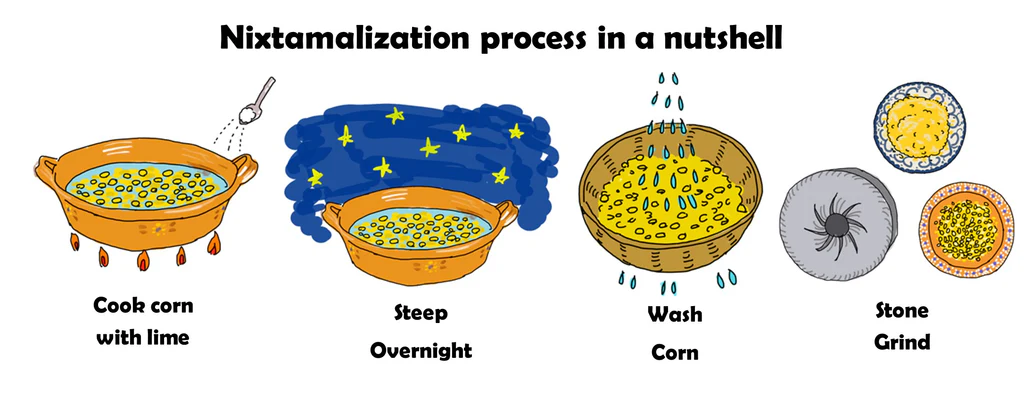
What made it revolutionary was nixtamalization—the Indigenous process of soaking maize in lime water before grinding it into masa. This single technique unlocked essential nutrients and flavor, giving life to tortillas, tamales, atoles, and more. Modern food science continues to confirm what our ancestors already knew: nixtamalized maize is superfood engineering born from Indigenous science. ²
Cooking was communal. Grinding on the metate, steaming in leaves, roasting over fire—it wasn’t just a method, it was ceremony. As UNESCO notes, traditional Mexican cuisine embodies “an ancestral, ongoing community culture,” where food links the earth to the table and the living to their ancestors. ¹
The Colonial Collision and the Birth of Mestizo Flavor
Then came conquest. Wheat, cattle, pigs, sugarcane, olive oil, and European spices changed everything—but not the essence. Rather than disappearing, Indigenous cuisine adapted. Out of cultural resistance came the mestizo palate that defines Mexico today.
Consider mole poblano, a symphony of Indigenous chiles and cacao blended with imported almonds, raisins, and cinnamon. Or the wheat tortillas of northern Mexico, a European grain transformed into something unmistakably local. These dishes aren’t relics of conquest; they’re proof that Mexican cooks turned colonization into innovation. As historian Jeffrey Pilcher writes, “Food is not just nutrition—it’s culture.”
The kitchen became a quiet site of resistance—one where Indigenous women preserved identity through flavor. Every new ingredient was reimagined through native knowledge, creating one of the world’s most layered culinary traditions.
What Survived the Centuries
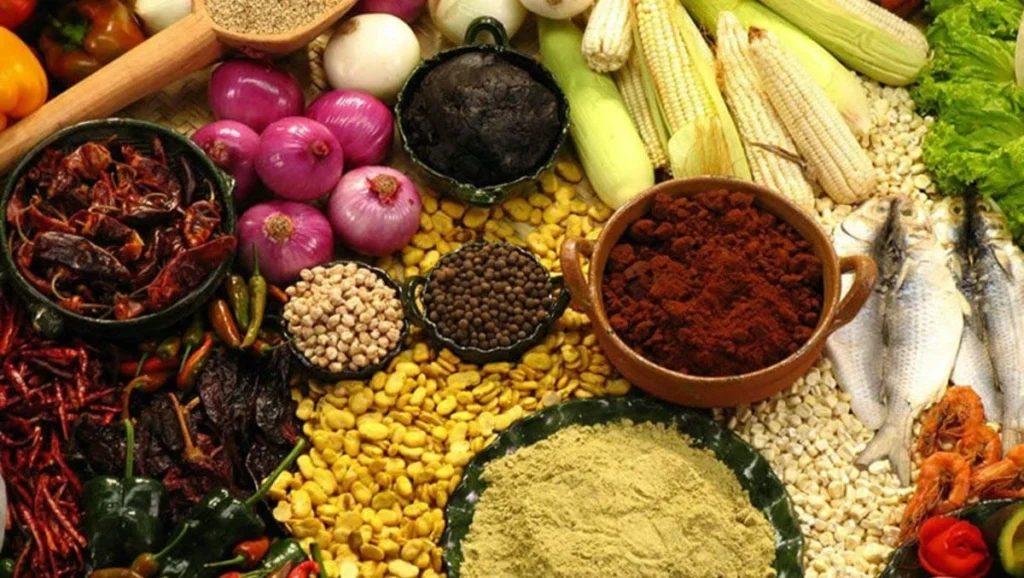
Some foods are timeless. They connect modern kitchens to pre-Hispanic hearths:
- Tamales — still made with masa nixtamalizada, wrapped in corn husk or banana leaf, steamed for family gatherings, offerings, or festivals.
- Tortillas de maíz — still pressed by hand, cooked on the comal, and served at nearly every meal in the country.
- Quelites, edible insects, wild herbs — ancient proteins and greens now finding their way back to urban menus.
They endure because they’re more than recipes—they’re systems of knowledge passed down through hands, not textbooks. In each, you can taste the same blend of science, spirituality, and community that’s defined Mexican identity for millennia.
Mapping Flavor: Mexico’s 18 Gastronomic Routes
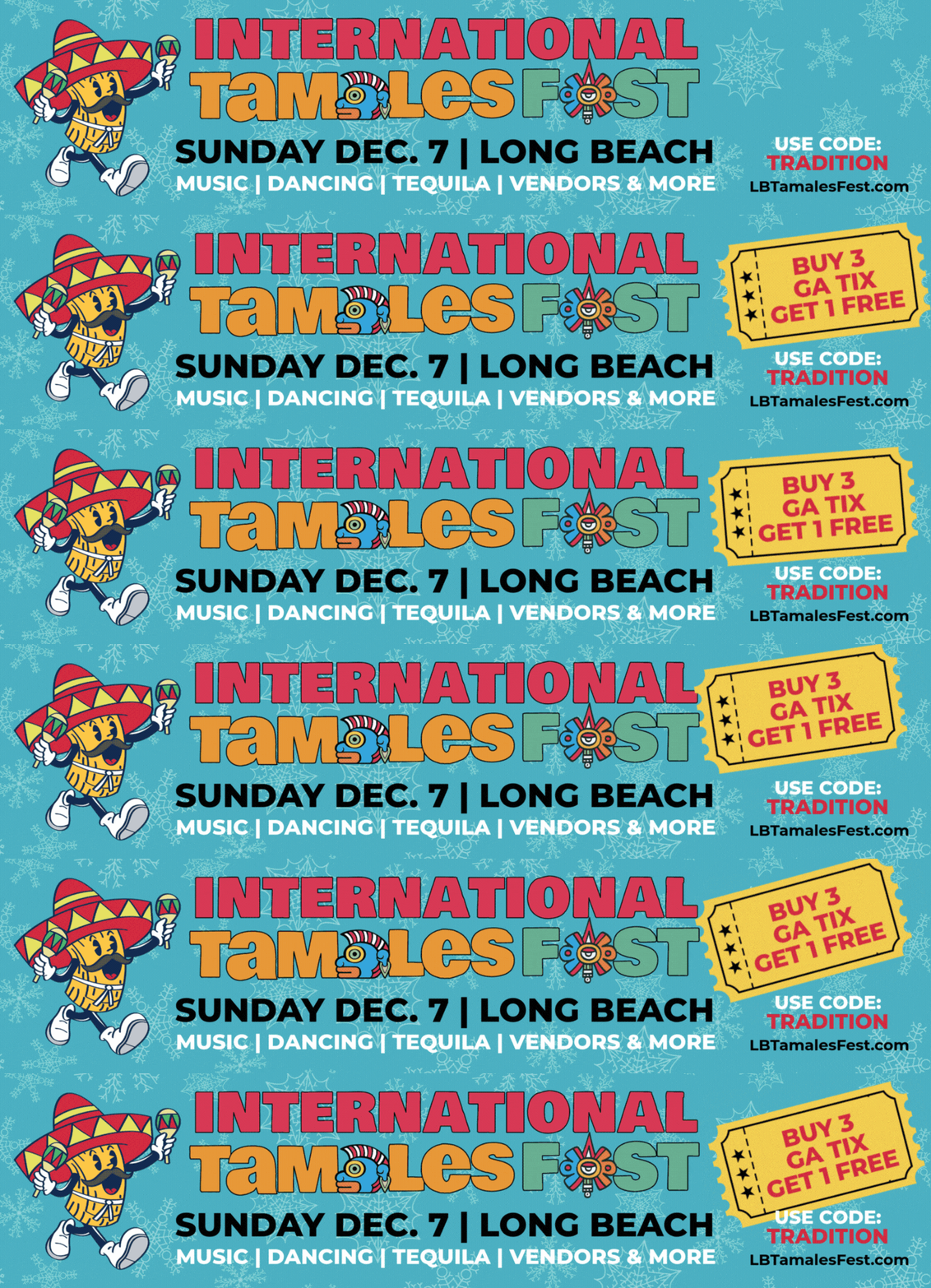
After UNESCO’s recognition, Mexico created 18 Gastronomic Routes to protect and promote regional foodways—a national roadmap of flavor and culture. From Baja’s seafood kitchens to Oaxaca’s moles and Veracruz’s vanilla fields, each route tells a different story of migration, terroir, and tradition. ³
- Los fogones entre Viñas y aromas del mar (Baja California & Baja Sur)
- El sabor de hoy (Ciudad de México)
- Cocina de dos mundos (Chihuahua)
- La ruta del cacao (Chiapas & Tabasco)
- Los mil sabores del mole (Oaxaca, Puebla, Tlaxcala)
- La mesa de la huerta y el mar (Sinaloa)
- El altar del Día de Muertos (Michoacán)
- La ruta de los mercados (Morelos, Guerrero, Edo. Méx.)
- Del café a la vainilla (Veracruz)
- Platillos con historia (Querétaro & Guanajuato)
- Cocina al son del mariachi (Jalisco)
- Los sabores del mar (Nayarit & Colima)
- La cultura del maguey (Hidalgo)
- Del mar a la laguna (Tamaulipas)
- Los dulces sabores de antaño (Tlaxcala & Puebla)
- El sazón del minero (Aguascalientes, San Luis Potosí, Zacatecas)
- Entre cortes y viñedos (Nuevo León, Coahuila, Durango, Sonora)
- Los ingredientes mestizos del Mayab (Yucatán & Quintana Roo).
Together, they form a living atlas of taste—proof that Mexican gastronomy is not a relic of the past, but a map of how culture continues to feed itself.
From the Milpa to Long Beach: The Tamal Lives On
If there’s one dish that ties every region, every migration, and every generation together, it’s the tamal. It’s the perfect symbol of Mexico’s living gastronomy—an Indigenous technology that has never stopped evolving.
Made from nixtamalized corn, filled with whatever the land offers, wrapped in a leaf, and cooked slowly with care, the tamal carries centuries of wisdom in every bite. It’s food meant to be shared—made by many hands, eaten in celebration, and offered in remembrance.
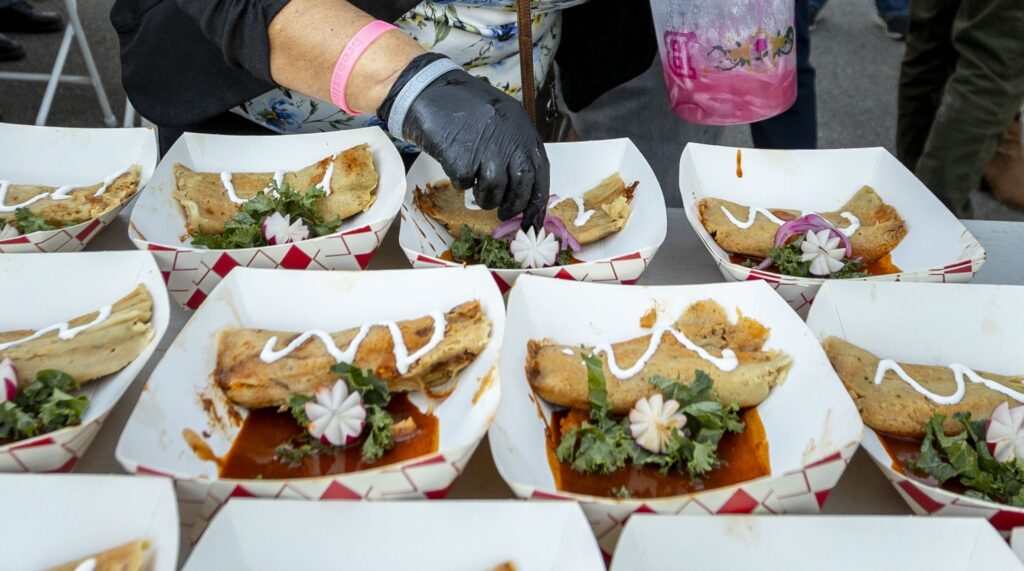
Photo by Alma Flash Photography
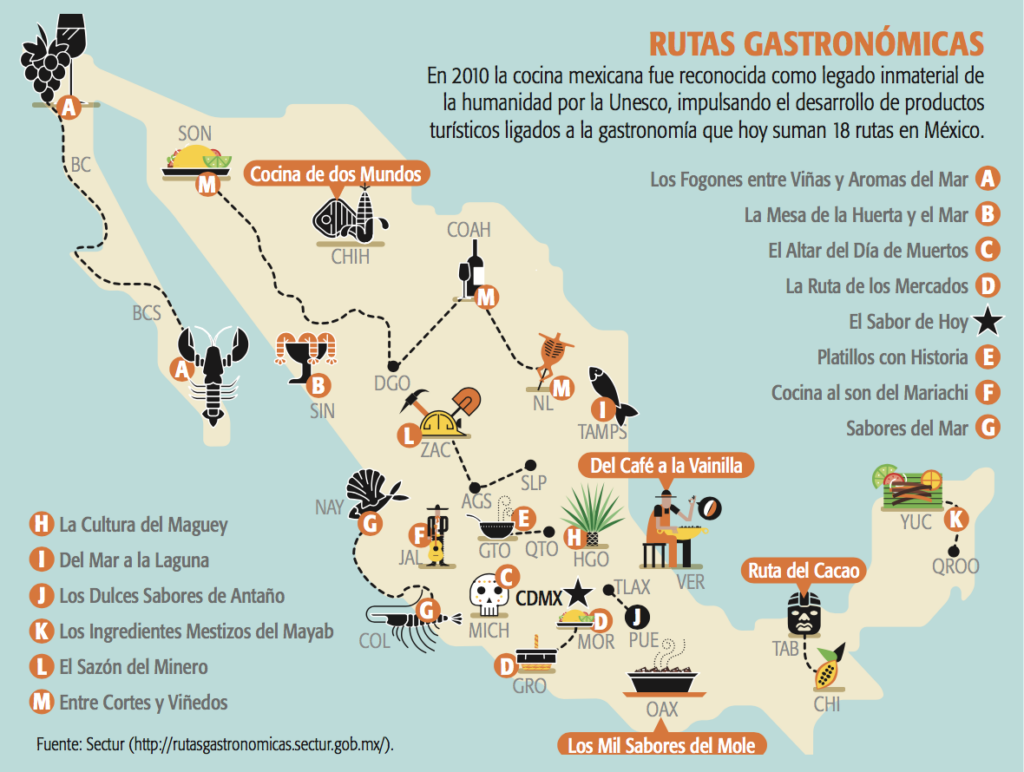
And that’s exactly what the International Tamales Festival in Long Beach celebrates: not just the dish, but the community behind it. This festival brings together families, chefs, artisans, and small businesses to keep tradition alive through flavor. It’s about honoring heritage while creating new memories—showing that Mexican gastronomy doesn’t just belong in history books or fine-dining menus. It lives wherever people gather to cook, share, and celebrate who they are.
From Oaxaca to Michoacán, from the Yucatán to California’s coast, the tamal connects us across borders and generations. It’s proof that culture survives when we keep feeding it—literally.
Why It Matters
On November 16, as Mexico celebrates its national culinary heritage, we celebrate right here too—from our kitchens in Long Beach to every street vendor, chef, and abuela who keeps the flame alive.
Because Mexican gastronomy isn’t nostalgia—it’s resistance, creativity, and joy. It’s a story written in corn husks and clay pots, carried across time by the people who refused to let it fade. And every tamal steaming at the festival, every mole thickening on the stove, is a reminder that food is memory, and memory is power.
So come hungry—to taste, to learn, to honor. Let’s eat like our ancestors are watching—because, in a way, they always are.
Written by Salvador Flores / Playalarga
Community, Culture & Pride from Long Beach to el corazón de México
Enhanced with AI
References
- UNESCO (2010): Traditional Mexican Cuisine – Ancestral, Ongoing Community Culture, The Michoacán Paradigm
- Library of Congress (2023): “Tamales and the Tamalada: A Christmas Tradition”; Ciencia UNAM (2020): “Tamales de México, su historia y sabores.”
- SECTUR / Gobierno de México (2023): Programa de Rutas Gastronómicas de México; Falstaff (2024): “What Makes Mexican Cuisine So Special?”; Pilcher, J. (2012): Planet Taco: A Global History of Mexican Food (Oxford Univ. Press).
Featured Image: Mole Poblano | Photo by Austintx on Flickr